
 Stylescape Studio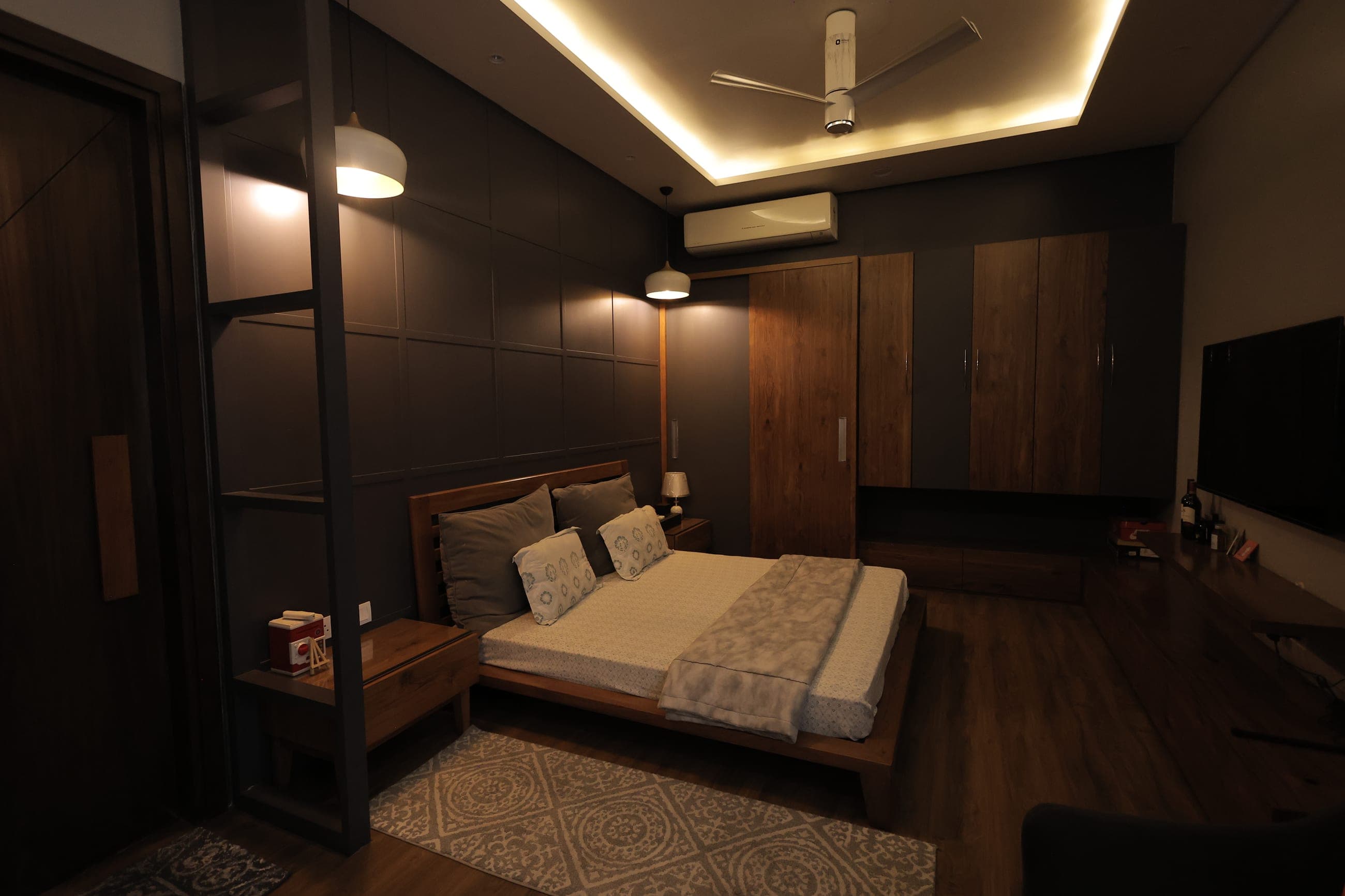
Walk into almost any furniture showroom around Mohali and you are, without quite realising it, choosing from what fits the showroom — not what fits your home. The three-seater that looked right under warehouse lighting arrives, and the wall it was meant for turns out to be a little short, or a little long, or interrupted by a beam that was never in the catalogue. Most furniture is built to an average. Rooms are not average, and the homes we work in across the Chandigarh region least of all.
That gap — between the piece and the place it has to live — is the quiet argument for bespoke furniture. It is also an argument worth making honestly, because custom is not always the right call and a good off-the-shelf piece is sometimes the sensible one. Custom furniture is a large part of what we do, so rather than sell it to you, we want to be straight about where it genuinely earns its cost and where a showroom buy will serve you just as well.
The room is never a standard size
New apartments and independent homes in Mohali, Zirakpur, New Chandigarh and Panchkula are full of the shapes that off-the-shelf furniture quietly ignores — a structural column mid-wall, a window that starts lower than you expected, a niche beside the entrance, a bedroom whose one good wall is forty centimetres short of the bed you liked. Standard furniture meets those rooms with compromise: a gap on either side of the wardrobe, a console that floats awkwardly off-centre, a dining table that leaves no room to pull a chair out on the window side.
Bespoke starts from the opposite end. We measure the room first and draw the piece to it — a wardrobe that runs clean to the ceiling line with no dust-collecting void on top, a bed built to the exact width of an alcove, a television unit that follows the full run of the wall instead of stopping short of it. The storage lands where you actually reach for it. Nothing is wedged in or left over. For smaller homes especially, that precision is often the difference between a room that feels cramped and one that simply works.
Material and finish, chosen rather than settled for
With a catalogue piece, you take the finishes on offer. Bespoke reverses that: you choose the timber or the veneer, the laminate or the painted finish, the stone for a tabletop, the fabric on a headboard, the handle, even the way an edge is profiled. If a new wardrobe needs to sit beside a floor you are keeping, or an heirloom cabinet you cannot part with, the finish can be matched to it rather than fought against.
That freedom is practical as much as aesthetic. Our summers are hard on furniture, and humidity swings are harder still — so materials can be specified for the climate they will live in, not for the showroom they were photographed in. The result is a piece whose look and whose durability were both decided on purpose.
Built to last, and built to be repaired
Longevity is where the difference is least visible on day one and most obvious five years in. A great deal of mass-made furniture is built to a price point, which usually means a thin carcass, stapled joints and hardware that works smoothly until it does not. When a hinge fails or a runner wears out, the whole unit often has to go, because it was never meant to be opened up and put right.
A well-made bespoke piece is built the other way around — sound joinery, a proper carcass, hardware chosen for how often it will be used, and construction that can be serviced and refixed rather than discarded. You are not only paying for how it looks; you are paying for the years it stays usable. Over the life of a home, a piece that can be repaired quietly outlasts two or three that cannot.
Furniture drawn into the room, not dropped into it
The best reason for bespoke is the one people notice last: cohesion. When furniture is bought separately, each piece arrives speaking its own language — a sofa from one mood, a table from another, a wardrobe from a third — and a room full of individually good things can still feel assembled rather than designed.
Because our custom pieces are drawn as part of the whole interior, they share the same proportions, the same material story and the same sightlines as everything else in the space. The curve of a headboard echoes an arch elsewhere; a console is scaled to the wall it anchors rather than to a standard size. And because the design is approved through 3D visualisation before anything is cut, you see each piece sitting in its finished room first — the finish, the scale, the way it reads against the floor and the light — instead of hoping it lands well once it is delivered.
What making it ourselves changes
Plenty of studios will happily design a bespoke piece and then hand the drawing to an outside workshop, where it becomes someone else's interpretation and someone else's timeline. The equation changes when the manufacturing genuinely lives in-house. Ours does: our furniture, along with our modular kitchens and wardrobes, is made on our own machines in the studio's manufacturing unit in Sector 82, JLPL Industrial Area, Mohali — the same place the studio works from, with a working display you are welcome to visit.
In practice that means the person who drew your piece can walk across and check it mid-production, so finish quality is controlled at the source rather than inspected after the fact. We source materials directly and check them before they are cut. The furniture is built from the same drawings as the rest of your interior, by the same studio that is accountable for the room it goes into — not relayed through a third party who never saw the space. And because the timelines are ours to keep, they are ours to answer for. You can see how that consistency carries across our work, and it is a large part of why clients looking for interior designers in Mohali come to us for the joinery as much as the design.
When off-the-shelf is exactly right
Bespoke is not the answer to everything, and we will say so when it is not. If a room is a well-proportioned standard size and a showroom piece happens to fit it properly, custom adds cost without adding much. If you are furnishing a rental, or a space you expect to rethink in a couple of years, the flexibility of ready-made furniture is a genuine advantage — you are not committing a built-in piece to a home you may not keep. Loose, movable items — accent chairs, side tables, lamps, the odd statement sofa — are often best bought rather than made, and mixing a few good off-the-shelf pieces into a largely bespoke scheme is frequently the smartest, most economical route of all.
Bespoke is worth paying for where the furniture has to fit the room, last for years, or belong to the whole design. Where none of those is pressing, a good showroom piece is no compromise at all.
The honest test is simple: is this a piece that needs to fit, last and belong — or one you are happy to move, change or replace? The first case is where custom earns its keep.
Come and see it being made
The clearest way to understand the difference is to stand in front of it. You are welcome to visit our unit in Sector 82 to see pieces being made and to look over the working display — timber, finishes and joinery you can open, close and run a hand along, rather than judge from a photograph. Since 2022 we have made bespoke furniture for more than 35 completed homes and workspaces across Mohali, Chandigarh, Panchkula, Zirakpur, New Chandigarh, Kharar and Yamunanagar, and we are glad to talk through whether your project is one where custom is worth it.
If you are weighing a piece — or a whole home — and want a straight view on what to make and what to buy, book a consultation and we will walk you through it.